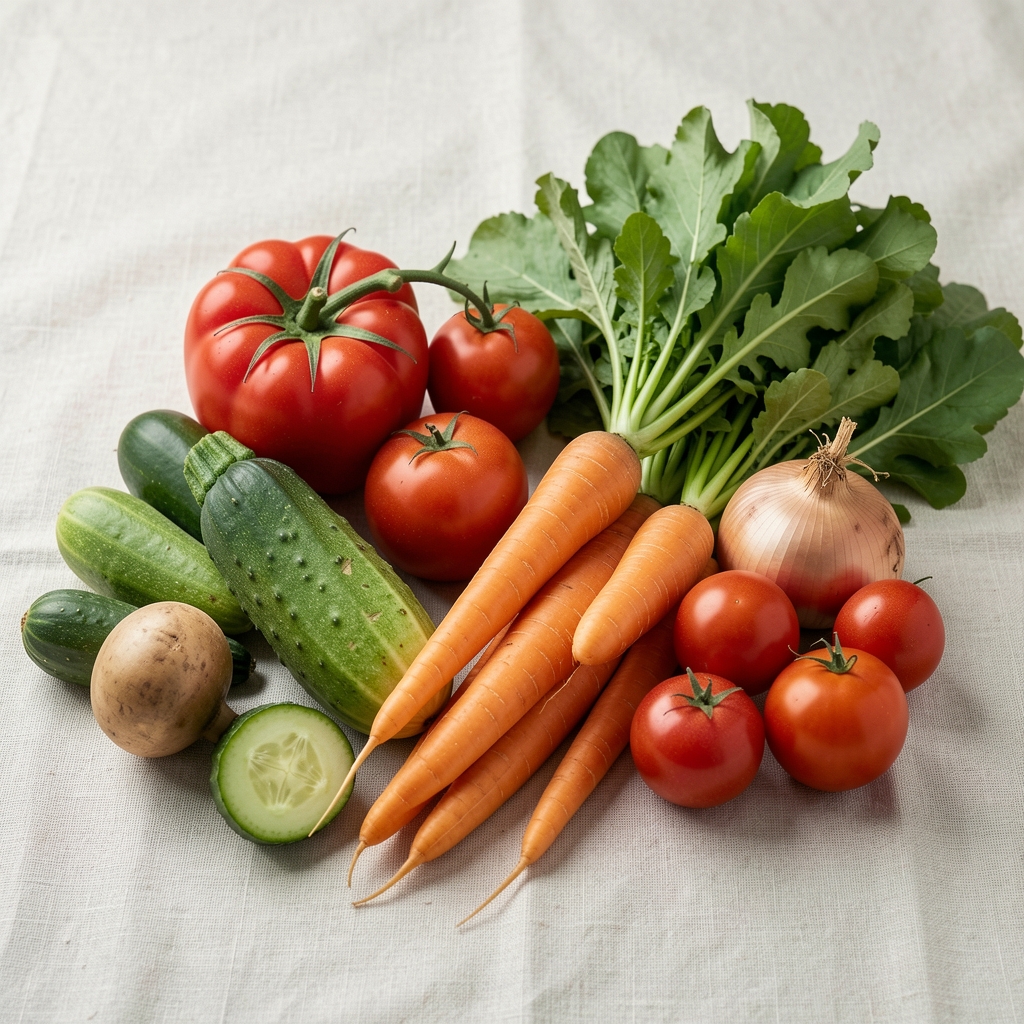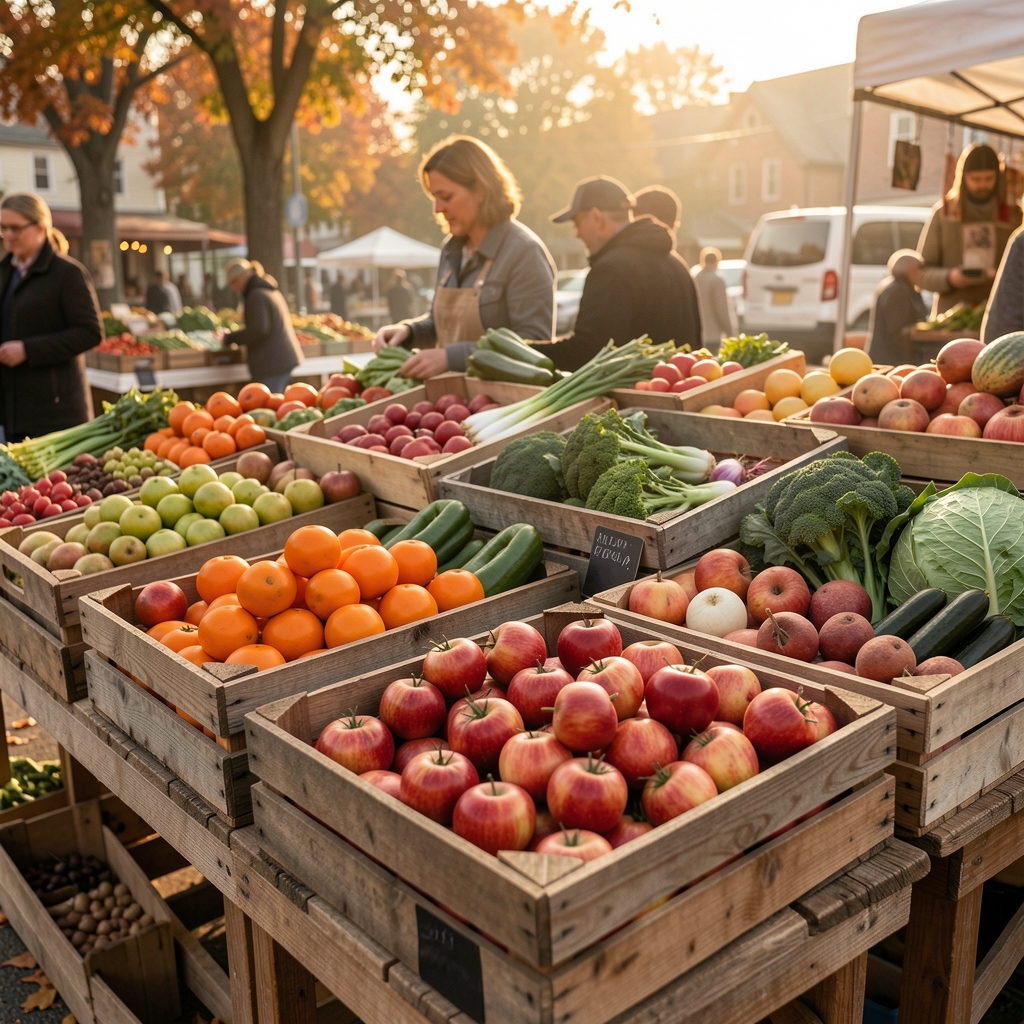
The seasonal calendar does not insist on itself. It arrives quietly — celeriac replacing courgette, purple sprouting broccoli overtaking last autumn's squash — and the cook who pays attention will find the weekly shop shifting not because of a conscious plan but because of what the market offers. This is, from a nutritionist's perspective, one of the most reliable mechanisms for building nutritional variety into daily eating without the effort of constructing a rotational plan from scratch. The season constructs the rotation on your behalf.
The Seasonal Calendar as a Nutritional Structure
It is a commonplace observation in nutritional writing that eating seasonally is beneficial — but the reasoning offered is usually economic, environmental, or flavour-related. What is less often articulated is the direct relationship between seasonal eating and nutritional variety in daily diet. When a person eats what is available in each month across a full year, they are, by definition, rotating their fruit and vegetable intake across a range that no single-season selection could achieve.
This rotation matters. Published dietary research consistently identifies dietary variety — specifically variety in fruit and vegetable consumption — as one of the most reliable contributors to nutritional balance over time. The specific nutritional contributions of, say, winter kale differ meaningfully from summer courgette: different fibre profiles, different mineral compositions, different phytochemical patterns. Eating both, in their respective seasons, delivers a nutritional breadth that eating only what is consistently available throughout the year would not.
The UK seasonal calendar offers a genuine span of variety for anyone willing to follow it. From January's root vegetables and winter brassicas to August's tomatoes, courgettes, and green beans, from autumn's squash and celeriac to spring's asparagus and new-season peas — the rotation is already constructed. The only requirement is the willingness to allow what is available to shape the weekly plate, rather than insisting on year-round access to the same narrow selection of convenient produce.
Nutritional Variety and the Body Over Time
When a nutritionist examines a food journal kept over several months rather than a single week, the patterns that emerge are often not about individual nutrient deficiency — most adults in the UK with reasonable access to varied food do not suffer pronounced deficiencies. What appears instead is narrowness: the same ten vegetables appearing week after week, the same fruits, the same cooking methods applied to the same ingredients. This narrowness is the quiet opposite of nutritional variety.
The body's relationship with food variety is a long-arc phenomenon. The fibre delivered by a range of plant foods — different types, different textures, soluble and insoluble forms in varying proportions — contributes to satiety in ways that a narrow selection cannot replicate. Dietary fibre supports a sense of fullness between meals; the variety of its sources appears to matter as much as the quantity. A diet that rotates across a wide range of vegetables provides a more complex fibre landscape than one that relies on, say, iceberg lettuce and frozen peas year-round.
The same principle applies to micronutrient density. Dark leafy greens in winter — kale, chard, cavolo nero — carry a different mineral profile than the lighter salad leaves of summer. Root vegetables offer sustained energy from complex carbohydrates in a way that summer produce, often higher in water content and lighter in starch, does not. The seasonal shift is not simply aesthetic; it is structurally nutritional, providing the body with a different nutritional landscape each quarter.
"The seasonal calendar does not require a plan. It requires only the willingness to eat what is available — and in doing so, to receive a nutritional variety that any fixed menu would struggle to match."
Seasonal Produce and Weight Awareness
The relationship between seasonal produce consumption and weight is not a simple one of caloric arithmetic. What the evidence-informed perspective on nutrition suggests is more nuanced: high vegetable and fruit intake, sustained across a full year through seasonal rotation, contributes to the kind of nutritional density that leaves less room for nutritionally thin convenience food on the plate. Satiety is supported; the need for additional snacking is reduced; the overall pattern of eating shifts toward what might be called a natural portion awareness.
This is not a dramatic effect. It does not produce rapid or dramatic changes in body weight, and it does not function as a standalone weight strategy. What it represents, in the context of gradual weight change observed over months and years, is a consistent background condition that supports weight awareness without requiring active management. The person whose weekly diet includes a wide range of seasonal vegetables is, almost incidentally, eating in a way that supports stable weight — not because of any specific property of any specific vegetable, but because of the overall nutritional density of the pattern.
Food journals that show consistent seasonal variety also tend, in this publication's observation, to show more stable week-to-week weight patterns. The correlation is not causal in any direct sense — there are many variables involved — but it is consistent enough to be editorially interesting. The long game of nutritional balance, played through seasonal eating, appears in the data as a kind of quiet stabilisation of the relationship between food choices and body weight.

Plant-Based Meals Within the Seasonal Frame
The plant-based approach to eating aligns naturally with seasonal produce rotation, but it does not require a complete exclusion of animal products to be effective. What it requires — at minimum — is that vegetables, legumes, whole grains, and fruit occupy the majority of the plate, with other food components playing a supporting rather than dominant role. In this configuration, seasonal produce is not a garnish; it is the structural centre of the meal.
A plant-based meal built around the season's available vegetables will, almost inevitably, achieve the nutritional variety described earlier in this piece. A spring bowl of new season peas, broad beans, asparagus, and a whole grain offers a fibre profile and micronutrient density that a centrepiece of white pasta with cream sauce cannot match. The point is not to eliminate the latter but to shift the proportional weight of the weekly plate toward the former. Cooking and nutrition, when combined with seasonal awareness, produce a practical framework that does not require complex dietary monitoring.
Protein-rich whole foods — legumes, lentils, beans, nuts, seeds — contribute to a sense of satiety within a plant-centred meal structure, filling the functional role of sustained energy delivery that diets reliant on refined carbohydrates cannot achieve with the same consistency. Combined with the structural variety of seasonal produce, they complete a nutritional architecture that supports both nutritional balance and, over time, gradual weight awareness.
- Seasonal eating provides automatic nutritional variety in daily diet without requiring a planned rotational scheme.
- Dietary variety in fruit and vegetable consumption is associated with nutritional balance in published dietary research.
- Fibre from a range of plant sources supports a sense of fullness between meals more effectively than narrow-spectrum intake.
- High seasonal produce intake appears in journal data as a consistent background condition supporting stable weight patterns.
- Plant-based meals built around seasonal vegetables achieve nutritional density without complex dietary tracking.
Practical Notes on the Seasonal Plate
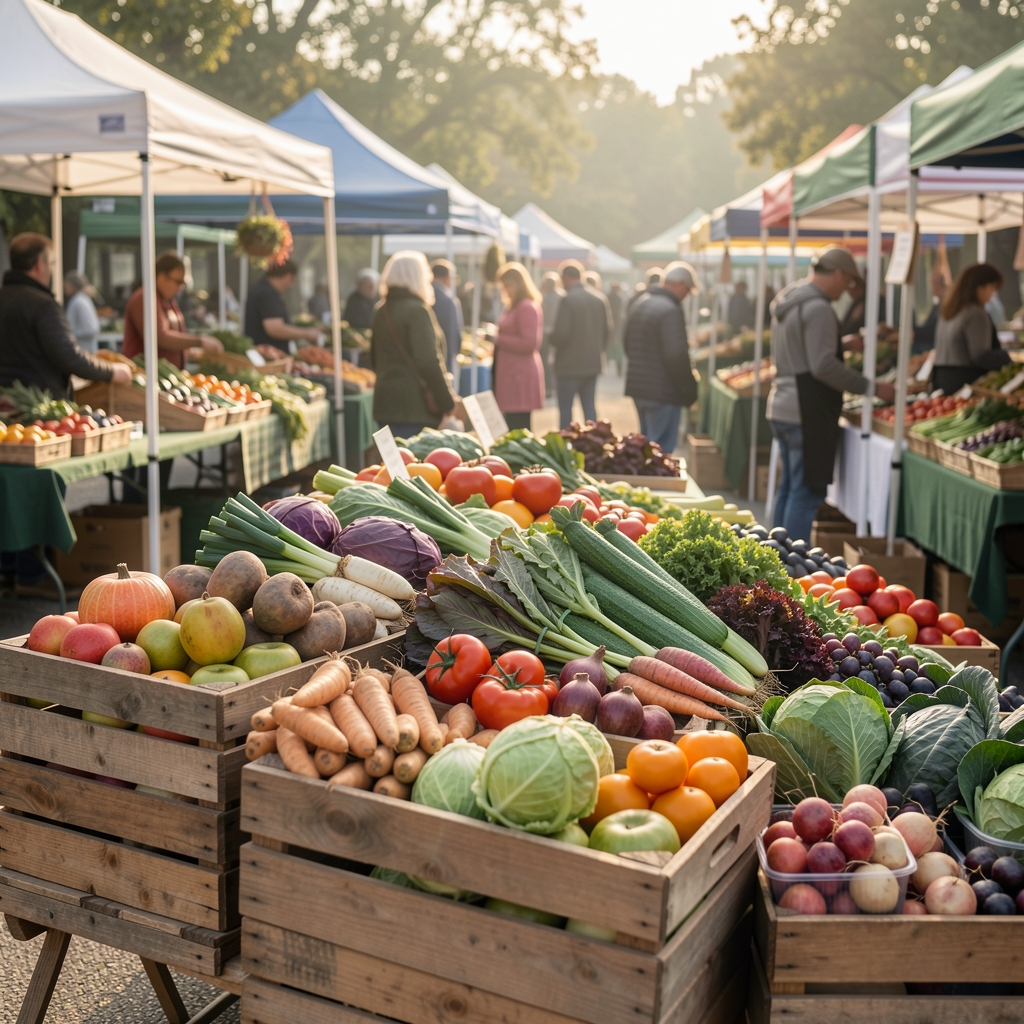
The practical challenge of seasonal eating in an urban environment like London is access — not all neighbourhoods have the same proximity to farmers' markets or specialist greengrocers. But the seasonal principle does not require specialist access: it requires awareness of what, among the available produce in any shop, belongs to the current season rather than the global supply chain. Learning that differentiation — which takes no more than a season's worth of attention — is what opens up the possibility of seasonal eating as a regular practice rather than an occasional aspiration.
The weekly food rhythm that supports nutritional balance through seasonal produce is, in practical terms, a shopping habit before it is a cooking habit. Deciding, at the point of purchase, to select what the current season offers and to build that week's meals around those ingredients — rather than repeating last week's familiar list regardless of season — is the single most effective structural adjustment available to anyone seeking to build more nutritional variety into their daily diet.
The long game of nutritional balance is not played in any single meal or any single week. It is played across months and seasons, in the accumulated effect of a weekly food rhythm that keeps returning to what is available, what is fresh, and what the calendar offers. Seasonal produce is not an aesthetic choice. It is a structural one — and it is available to anyone who cooks.

Eleanor Whitfield is the founding editor of Ravelo Review. A qualified nutrition professional with a background in dietary research and food journalism, she writes on eating patterns, seasonal food choices, and the relationship between everyday food habits and weight awareness.
More from Eleanor